Showing posts with label Multi-Media Lit. Show all posts

Monday, July 18, 2011

Word Coasters

I may have mentioned before that I am into design.  Having an interest in design, reading and writing, I'm naturally drawn to the fusion of these topics.  Writing about design?  Yes.  Designs that incorporate writing?  Yes.  Today I came across these coasters that incorporate not just writing, but literature in their design.


The set of four handmade ceramic coasters features real pages from an antique copy of The Scarlett Letter.  What could be better for the home of a book lover?  I'm not being reimbursed in any way for promoting these coasters, I just thought I'd share because I like them so much.  See these and other (often word-related) coaster designs from the designer here:  http://www.artfire.com/users/CoastingAlong

Tuesday, July 12, 2011

Mark it in Pencil Wordle

Just something a little bit fun today.  Have you heard of Wordle?  At www.wordle.net you can analyze text to see what words you use most and make a fun image while you're at it.  Here's the wordle I made for Mark it in Pencil:

Thursday, March 10, 2011

Keep it Personal

If you read this blog you probably know that I write for a local blog here in Portland but did you know that I write two other personal blogs in addition to this one?  In addition to my love for all things reading and writing, I have a small passion for all things domestic.  On These Good Ideas I share (you guessed it) good ideas about all things that are happy and helpful for everyday life.  I share everything from new recipes to DIY projects to art and music finds.  The blog functions as a way for me to keep track of the things I want to remember and share them with others at the same time.  Multiple passions in life have a way of intermingling, don't they?  I have this little passion for design, but I notice that my design choices are often informed by my love of books and writing.  I am really into bookcases and decorating with books.  I also love to see pictures of typewriters and similar writing and reading inspired art.  Check out this picture I recently bought from 20X200.com:


I love this photo and I can't wait to frame it and hang it right over my writing desk.  Anywho, lately I've been thinking about personal writing.  I have most recently started a third blog, this time with my husband.  We are beginning the process of searching for a new home and (we hope) diving into the world of homeownership.  I do most of the actual writing for the blog and I've been working on keeping it really personal.  It is, after all, directly about my personal life.  I've come to realize that personal writing is not something that happens just because you decide to do it.  Really personal writing is something that you have to come into; it is a response to an emotional state that you have to find a way to get yourself into.  You have to really feel something about your subject or else it will come out dry and boring.  For most purposes I use free-writing to try to get into the right state of mind.  I find that if I write long enough, and more importantly without pressure to write certain things or in a certain way, I can usually get to the right place.  For blogging purposes, however, I've found a different tactic.  I find it really helps to imagine that I'm writing to someone.  Not a general audience but a specific person, anyone who might be reading and try to imagine what I would say to him or what I would write to him if he were the only one who was going to read it.  For the new blog I imagine that I am writing to my mother.  We live on opposite sides of the country and since she can't be here to help with the house search the blog is a great way to keep her up to date.  I definitely notice that when I stay in the mindset of writing to her my posts are shorter, clearer and easier to read.  I don't ramble as much, I just tell her what I think she would want to know and I write it just like I would write it to her.  I've been transferring this tactic over to my other blogs too and I hope it makes a difference.  Let me know what you think!

Friday, January 21, 2011

Tibor de Nagy - Painters and Poets

“Pyrography: Poem and Portrait of John Ashbery II,” - Larry Rivers (1977)
Check out The New York Times' Weekend Arts section today for an article on Tibor de Nagy Gallery in New York City.  Beginning in the 1950s, Tibor de Nagy and his associate John Bernard Myers promoted little none painters and poets in the gallery and in a line of publications.  The gallery is celebrating 60 years with "Painters and Poets," an exhibition remembering the Gallery's beginnings and it's role in developing a relationship between the worlds of painting and poetry.

Click here to read the article online.

Or visit www.tibordenagy.com.

Friday, October 15, 2010

On Punctuation

From today's Writer's Almanac, shared with me by a friend:


On Punctuation


not for me the dogma of the period
preaching order and a sure conclusion
and no not for me the prissy
formality or tight-lipped fence
of the colon and as for the semi-
colon call it what it is
a period slumming
with the commas
a poser at the bar
feigning liberation with one hand
tightening the leash with the other
oh give me the headlong run-on
fragment dangling its feet
over the edge give me the sly
comma with its come-hither
wave teasing all the characters
on either side give me ellipses
not just a gang of periods
a trail of possibilities
or give me the sweet interrupting dash
the running leaping joining dash all the voices
gleeing out over one another
oh if I must
punctuate
give me the YIPPEE
of the exclamation point
give me give me the curling
cupping curve mounting the period
with voluptuous uncertainty

"On Punctuation" by Elizabeth Austen, from The Girl Who Goes Alone. © Floating Bridge Press, 2010.


Visit:   http://writersalmanac.publicradio.org


Listen:

Saturday, October 2, 2010

Inspirational Listening for Writers and Readers

Almost as great as reading what a writer has written about writing is listening to a writer talk about writing.  Every few weeks, Oregon Public Broadcast show Think Out Loud brings listeners into the minds of local writers with its series Northwest Passages.  Writers share their ideas, inspirations and philosophies on writing with host Emily Harris and even read a sample of their work.  They also answer questions emailed or called in by curious listeners who are writers and avid readers themselves.  

Northwest Passages is always one of my favorite listening experience if I am lucky enough to catch it live.  But fortunately for those of us who are not always tuned into OPB at 9am and for those of you who live outside of Oregon, past broadcasts are available to listen to online.  I hope you find them as enjoyable and inspiring as I do.  Happy Listening!

Friday, July 23, 2010

Unhappyhipsters:
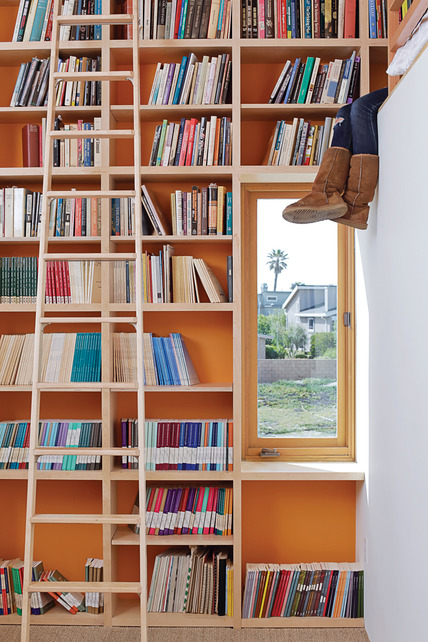
The only activity that could combat the horror of the child’s clunky Ugg boots—organizing the upper shelves by color and size.

(Photo: Shawn Records; Dwell)

 I understand.

Monday, June 21, 2010

Thinking Backwards

I love discovering the ways in which different creative media influence one another.  Among other greats of the fashion and art world that Mary-Kate and Ashley Olsen interview in their book Influence, Mary-Kate talks to interior architect and designer David Collins.  He tells her that he is inspired by Gone with the Wind because of the way it was written.  Margaret Mitchell wrote her manuscript beginning with the final chapters and worked her way through the story backwards.  In fact, the manuscript was accepted for publication before she had even completed the first chapters (Blair Rouse).  Collins explains how this style of writing has influenced his work:
You have to know the ending; how you got there is the story--because there are so many things that are a series of accidental happenings.  That's why, when I'm approaching a design project, I've got to figure out what it's going to feel like in the end.  I need to think about the ending first.  You don't always know what it's going to look like totally, but you have to think of what its going to feel like at the end.
I think this is often true in writing.  Not that you always need to or even can know the ending, but that it often helps to know what it is that you are trying to accomplish.  The mood, the tone, the style; what you want it to feel like at the end; the effect you want it to have for you and for the reader.  For me, the first draft usually doesn't come out feeling like I want it to, so I have to reread, rewrite, revise and sculpt it into something that serves the purpose that I meant for it to serve.  This is what people in the writing world call the "felt sense," among other names. It is what you keep coming back to when you get stopped, or when you just need to make sure you're staying on track.  Without it, writing can go everywhere and be anything; with it, writing can be effective, focused and meaningful.

Wednesday, May 12, 2010

A Look at Perception

In the study of literature and the conversation about how it is interpreted, there is always the question of the reader's context. How a person reads a text is effected by her experiences, her viewpoint, her beliefs, even her immediate moods and emotions at the time of reading.

Visual and performance artist Amir Baradaran explores this subject in an absolutely fascinating way.

As if
Marina Abramović's current exhibit/performance, The Artist is Present at MoMA weren't fascinating enough, Baradaran brought a performance of his own into the exhibit a few days after its opening. His performance, titled The Other Artist is Present highlights the perception of the audience by altering their experience. From the explanation of the piece on Baradaran's website:
"No doubt, certain patrons will recall the mysterious man upon entering the atrium and witnessing Abramovic’s piece, thus shaping their experience of what was once an unrelated work. By joining itself to the Balkan artist’s performance, Baradaran’s reactive piece has left an indelible mark- impacting and altering the perception and memories of the viewer."
View Amir Baradaran's four act performance The Other Artist is Present

More about about
Marina Abramović and The Artist is Present:
Wikipedia
New York Times

The Artist is Present at MoMA
The Marina Film Project
Related Posts Plugin for WordPress, Blogger...